

Seasoning carbon steel is not a one-time chore you tolerate before the real cooking starts. It is the step that turns a plain steel pan into a reliable everyday tool that releases food more easily, browns beautifully, and stands up to years of use.
If you want to move away from synthetic nonstick coatings, carbon steel is one of the smartest upgrades you can make. The method is simple: build a thin oil layer with heat, then protect that layer with quick cleaning, thorough drying, and occasional touch-ups. Once you get the rhythm right, daily cooking becomes easier, not harder.
What Carbon Steel Seasoning Does for Nonstick Cooking
Carbon steel is mostly iron, which means it can rust if left bare and wet. Seasoning solves that by creating a baked-on layer of oil that bonds to the metal. That layer acts like a protective coating and helps reduce sticking over time.
This is why a seasoned carbon steel pan looks darker after use. The color shift isn't damage. It's a sign that the seasoning layer is building. A new pan may start out silver-gray, then turn blotchy brown, bronze, and eventually deep brown or black in places.
Patchy color is normal.
What matters most is performance. When the pan heats evenly, releases food well, and dries without rust, the seasoning is doing its job. You are not chasing a perfect cosmetic finish. You are building a durable cooking surface that improves with use.

Best Oil for Carbon Steel Seasoning
The best oil for carbon steel seasoning is a neutral oil with a high smoke point. You want an oil that wipes on in a very thin film and can handle strong heat without leaving a gummy mess. Grapeseed oil and sunflower oil are both popular choices for that reason, and canola oil also works well in many kitchens.
Use less oil than you think you need. That single habit makes the biggest difference between a smooth seasoning layer and a sticky one. After wiping oil onto the cooking surface, wipe it again until the pan looks almost dry.
|
Oil |
Why home cooks like it |
Good use for seasoning |
|---|---|---|
|
Grapeseed oil |
Neutral, light, easy to wipe thin |
Excellent first choice |
|
Sunflower oil |
Neutral taste and good high-heat use |
Great for initial seasoning |
|
Canola oil |
Affordable, common, easy to find |
Solid everyday option |
|
Avocado oil |
High heat tolerance |
Good if you already use it |
A few fats are better left out of the first seasoning rounds.
- Butter
- Unfiltered or strongly flavored oils
- Thick puddles of oil
- Heavy grease coats
Once your pan is seasoned, you'll still want to cook with some fat. Carbon steel is not a zero-oil pan. Even a well-seasoned surface performs better with a bit of oil or butter in the pan before the food goes in.
How to Season a Carbon Steel Pan Step by Step
You can season carbon steel on the stovetop or in the oven. For many home cooks, the stovetop is fast and practical, especially for touch-ups. The oven can help if you want more even coverage on the sides of the pan. Either way, the rule stays the same: very thin oil, enough heat, repeated cycles.
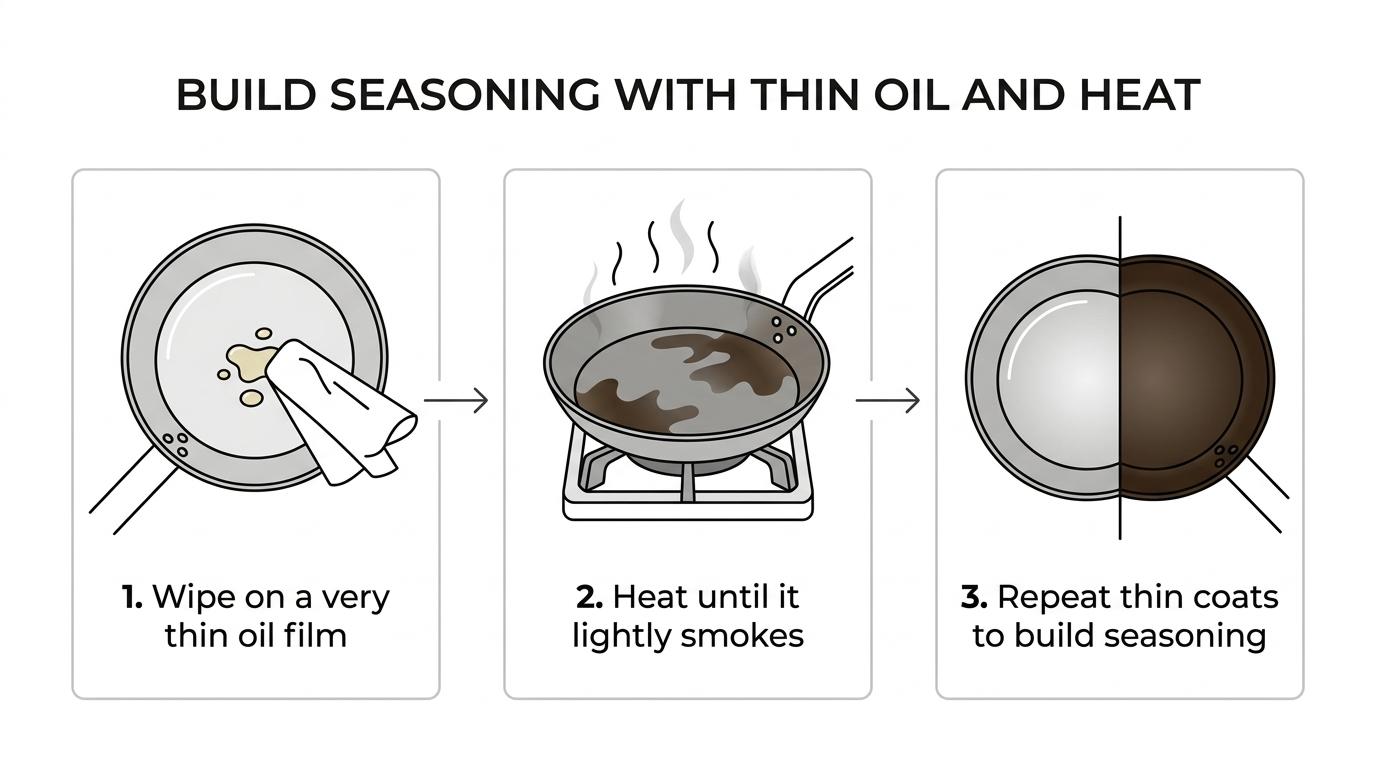
If your new pan arrived with a protective coating or wax layer, wash that off first with hot water and dry the pan completely before you start.
- Clean the pan: Wash off any factory coating, dust, or residue, then dry it fully.
- Warm the pan: Heat it briefly so any remaining moisture disappears.
- Apply a thin oil film: Add a few drops of neutral, high-smoke-point oil to the cooking surface and interior sides, then wipe until the pan looks nearly dry.
- Heat past the smoke point: Place the pan over medium-high to high heat until the oil starts to smoke lightly and the surface begins to darken.
- Hold the heat briefly: Keep heating for a few minutes so the oil bonds to the steel.
- Cool and wipe: Let the pan cool enough to handle, then wipe away any excess oil.
- Repeat the cycle: Two or three thin coats are usually enough to get a strong start.
Many guides suggest that a quick initial seasoning can be done in about fifteen minutes with two heat cycles. That's a useful benchmark, but don't rush the wipe-down. If too much oil stays on the pan, you can end up with tacky spots that grab food instead of releasing it.
If you use the oven, set the pan upside down on a rack with a sheet pan below to catch drips. The oven method is helpful when you want to season the full interior more evenly. The stovetop method is often better for quick upkeep after regular use.
Common Carbon Steel Seasoning Mistakes That Cause Sticking
Most seasoning problems come from using too much oil or babying the heat. Carbon steel likes confidence and high heat. Thin coats and enough heat will beat thick coats and cautious heating every time.
Another common mistake is cooking delicate acidic ingredients too early. Tomatoes, citrus, wine-based sauces, and other acidic foods can strip a young seasoning layer and leave the pan looking raw in spots. That doesn't ruin the pan, but it does mean you may need a quick re-season before the next meal.
These are the issues that trip people up most often:
- Too much oil: Excess oil turns sticky instead of bonding cleanly to the steel.
- Too little heat: If the oil never reaches proper heat, the seasoning layer stays weak.
- Acidic foods too soon: New seasoning can wear down fast when exposed to tomatoes, wine, or citrus.
- Soaking the pan: Water sitting on bare or thinly seasoned steel invites rust.
- Harsh scrubbing: Aggressive abrasives can strip seasoning you just built.
You will also get better results if you preheat the pan before adding cooking fat. A properly preheated carbon steel pan holds onto its seasoning better and gives you more consistent browning.

Daily Carbon Steel Pan Care to Prevent Rust
Daily care is what keeps seasoning working. After cooking, rinse or wipe the pan while it's still warm, then dry it completely. That last part matters. A carbon steel pan left damp in the sink is asking for rust.
Routine soap is usually not necessary. In most cases, hot water, a soft sponge, and a pan scraper are enough to remove bits of food. If something is stuck, add a little water to the warm pan, loosen the residue gently, then dry the surface over low heat.
Never put carbon steel in the dishwasher and never soak it.
Once the pan is dry, wipe on a tiny amount of oil before storage if the surface looks thirsty or freshly cleaned. You don't need a slick coating. A whisper-thin layer is enough to guard the steel and support the seasoning layer between uses.
If you use utensils often, gentler tools help. Terra Cove Home’s teak wood utensils are a smart match for carbon steel because they are easy on the pan and fit the same clean-cooking mindset. If you cook a lot of tomato sauces or braises, pairing your carbon steel skillet with enameled cast iron cookware gives you the right tool for acidic dishes without wearing down your skillet’s seasoning.
When to Re-Season Carbon Steel and When to Keep Cooking
A carbon steel pan does not need to look perfect to cook well. Dark spots, uneven color, and rings near the center are all common. If the surface feels smooth and the food is releasing well, keep cooking.
Re-season when the pan feels sticky, shows orange rust, or has obvious bare gray patches after cleaning. You should also consider a touch-up after a long acidic cook that strips part of the surface. Usually, one quick oil-and-heat cycle is enough to bring the pan back.
Early on, cook foods that help build the seasoning layer. Potatoes, onions, pancakes, grilled sandwiches, and proteins with a little fat are often easier choices than a lemony pan sauce or a long tomato simmer. With regular use, the pan gets more forgiving.
Choosing Carbon Steel Cookware for Easier Seasoning
If you're buying your first carbon steel pan, make your decision with daily cooking in mind. A pan that feels balanced, heats evenly, and has enough surface area for the meals you actually make will be easier to season and easier to keep in rotation.
Look for a pan you will want to use often. Seasoning builds through repetition, so the right skillet is the one that earns a place on your stovetop week after week. If you're upgrading from older coated nonstick cookware, Terra Cove Home’s carbon steel frying pans make a strong next step. They fit the needs of health-conscious home cooks who want non-toxic cookware, dependable heat performance, and craftsmanship that feels good in hand.
That matters because the best seasoning plan is still simple: use the pan, clean it quickly, dry it fully, and keep the cookware supports that routine. When your cookware supports that routine, better daily cooking follows naturally.