

Choosing cookware is no longer just about heat retention, price, or whether cleanup feels easy after dinner. For many home cooks, the bigger question is what comes into contact with food every single day, and whether that material matches a cleaner, more thoughtful kitchen.
That is where non-toxic cookware stands out. It gives shoppers a way to reduce avoidable exposures, cook with confidence, and invest in pieces that can stay useful for years instead of being replaced every time a coating wears down.

Why non-toxic cookware matters for everyday cooking
Cookware is a food-contact surface, not just a kitchen accessory. When a pan is heated, scraped, washed, and heated again, its material quality matters. People who read ingredient labels closely often apply the same logic to their pots and pans. They want fewer unknowns, clear material disclosure, and practical durability.
The better question is not whether every pan in the market is unsafe. It is which materials offer more control, fewer compromises, and a stronger long-term fit for the way you cook.
That makes non-toxic cookware appealing for a simple reason: it shifts the focus from convenience alone to material integrity. In many kitchens, that means moving toward uncoated carbon steel, enameled cast iron, and well-made utensils that support the cookware rather than damaging it.
Non-toxic cookware concerns to know before you buy
The biggest discussions around cookware safety usually center on PFAS-based nonstick coatings, overheating, and metal contamination. These issues are related, but they are not identical.
The FDA states that certain PFAS-containing substances have been authorized for food-contact applications, including nonstick cookware. It also notes that for nonstick pots and pans, PFAS molecules are polymerized and applied at high temperatures, which tightly binds the coating to the cookware. Studies cited by the FDA indicate negligible migration into food when these pans are used as intended.
That said, many shoppers still choose non-toxic cookware alternatives because they want to avoid PFAS-based coatings in general, reduce worry about coating wear over time, and avoid the performance limits that come with coated nonstick pans. The German Federal Institute for Risk Assessment has stated that PTFE-coated cookware should not be heated empty, and that at around 360°C (680°F), hazardous gases can be released. Fast-heating stovetops, including gas and induction, can raise that risk if an empty pan is left unattended.
A separate concern involves lead leaching. The FDA has warned that some imported aluminum, brass, and aluminum-alloy cookware can leach lead under food-contact conditions. That issue matters even more for households with children or anyone who is pregnant.
Before you buy, keep these evidence-backed concerns in mind:
- PFAS-based coatings: many are considered low-risk in normal use, but some shoppers still prefer to avoid them entirely
- Overheating empty PTFE pans: very high heat can release hazardous gases
- Lead-leaching cookware: some imported aluminum, brass, and alloy pieces have raised serious safety concerns
- Surface damage: scratched or worn cooking surfaces deserve closer attention and may shorten a pan’s useful life
Best non-toxic cookware materials for home kitchens
If your goal is to cut down on chemical coatings and choose materials with a strong track record, a few categories rise to the top. Carbon steel is a favorite for stovetop versatility and high-heat cooking. Enameled cast iron is a strong choice for roasting, braising, and acidic dishes. Both fit well in kitchens that value performance and cleaner material choices.
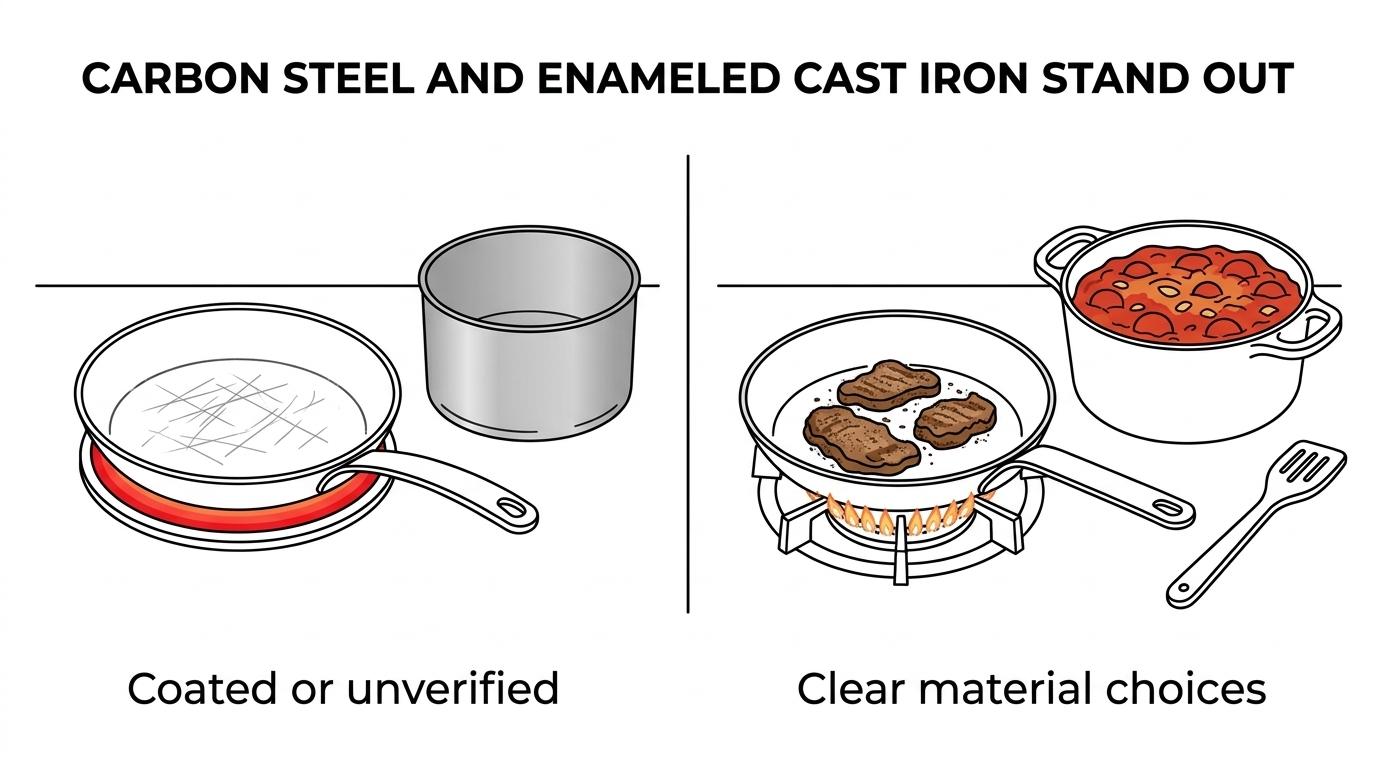
The right pick depends on how you cook most often. A busy weeknight cook may want a responsive skillet that can brown vegetables, sear chicken, and move quickly from burner to burner. A weekend cook may care more about oven cooking, slow roasts, and one-pan meals that go from kitchen to table.
|
Material |
Why many shoppers choose it |
What to watch for |
Best use |
|---|---|---|---|
|
Carbon steel |
No synthetic nonstick coating, high-heat friendly, builds natural seasoning over time |
Needs drying and seasoning care |
Searing, sautéing, frying |
|
Enameled cast iron |
No seasoning required on the interior, handles acidic foods well, strong heat retention |
Heavier, enamel should be treated with care |
Roasting, braising, baking |
|
PTFE-coated nonstick |
Easy release, easy cleanup |
Avoid overheating empty pans, coating wear matters |
Low to medium heat quick cooking |
|
Unverified aluminum or brass cookware |
Often low-cost or traditional in appearance |
Some imported pieces have shown lead-leaching concerns |
Best avoided unless material safety is clearly documented |
Carbon steel cookware for high-heat everyday cooking
Carbon steel has become one of the strongest answers to the non-toxic cookware search. It is uncoated, durable, and excellent for cooks who want crisp browning and direct heat response without relying on a synthetic nonstick layer.
A well-made carbon steel pan develops seasoning through use. That seasoning is built from oil and heat, creating a naturally slick cooking surface over time. It is not the same as a factory-applied coating, and that difference matters to shoppers who want a more stripped-down material profile.
It also performs beautifully. Carbon steel can handle higher heat than many coated pans, making it a smart fit for seared proteins, blistered vegetables, and fast weeknight meals. Many home cooks like that it feels lighter and quicker in the hand than traditional cast iron while still delivering serious browning power.
That is why a hammered carbon steel pan can be a smart first step when upgrading a kitchen. It covers a surprising amount of daily cooking without introducing a synthetic cooking surface.
Carbon steel works especially well for:
- Weeknight sautéing
- High-heat searing
- Fried eggs in a seasoned pan
- Crisp-edged vegetables
- One-pan stovetop meals
Enameled cast iron cookware for roasting and acidic foods
Enameled cast iron solves a different problem. Some cooks want the stability and heat retention of cast iron, but do not want to maintain raw cast iron seasoning for every use. The enamel interior creates a barrier between food and the metal, making it a practical choice for tomato-based dishes, wine reductions, baked casseroles, and slow roasts.
It also shines in the oven. A good enameled cast iron roasting pan can move from oven to table with ease, and the weight of the material helps create even cooking across larger dishes. For holiday meals, braised cuts, baked pasta, or roasted vegetables, it earns its shelf space quickly.

Terra Cove Home’s enameled cast iron cookware fits this role well for cooks building a non-toxic cookware set around a few hardworking essentials.
If you want one piece that feels steady, versatile, and ready for family-style cooking, enameled cast iron is hard to beat.
That same versatility is why outdoor-cooking guides often focus on capacity, heat retention, and one-pot cooking, which are the same strengths that make enameled cast iron so useful in a home kitchen.
How to choose non-toxic cookware that actually lasts
Material claims are only part of the buying decision. Longevity matters too. A pan that needs replacing every year is rarely the best value, even if the upfront price looks attractive.
Look closely at product information. Clear naming matters. “Carbon steel” and “enameled cast iron” are specific. Vague labels like “alloy” or “metal blend” tell you much less. If a seller cannot clearly explain what the pan is made from and how it should be used, that is useful information by itself.
It also helps to think in terms of your real cooking habits rather than your ideal kitchen fantasy. If you cook eggs and vegetables every morning, a carbon steel skillet may carry more value than a large specialty pan. If you roast vegetables, bake gratins, or cook for groups, enameled cast iron may pull more weight.

When comparing options, check for these signals:
- Material disclosure: clear identification of carbon steel or enameled cast iron
- Care instructions: honest guidance on seasoning, preheating, washing, and drying
- Surface durability: cookware designed for repeated use, not disposable convenience
- Utensil pairing: wood utensils help protect cooking surfaces and reduce scratching
- Seller trust: reliable sourcing matters, especially when avoiding poorly documented imports
This is also where kitchen tools come into play. Wooden utensils, especially solid teak utensils, are more gentle on cookware surfaces than harder scraping tools. They support seasoned carbon steel, help preserve enamel, and fit the overall goal of a more thoughtful kitchen setup.

Simple habits that help non-toxic cookware perform better
Even the best cookware benefits from good habits. A non-toxic pan is not maintenance-free, but the upkeep is usually straightforward and well worth it.
Carbon steel should be dried promptly after washing and lightly oiled when needed. Enameled cast iron benefits from moderate preheating and utensils that will not chip or scrape the finish. Coated pans, if you still use them, should never be heated empty and should be paired with non-scratching tools.
A few habits make a real difference over time:
- Preheat with intention: avoid blasting a cold pan on maximum heat
- Use gentler tools: wood utensils are a smart match for most cookware surfaces
- Store carefully: reduce pan-on-pan abrasion when stacking
- Replace mystery pieces: older or poorly labeled cookware is rarely worth the uncertainty
Building a non-toxic cookware set for real life
A strong non-toxic cookware setup does not need to start with a huge set. In fact, many kitchens work better with fewer, better pieces. One carbon steel skillet, one enameled cast iron roasting pan, and a set of quality wooden utensils can cover a large share of daily cooking.
That approach also makes shopping simpler. Instead of paying for filler pieces that stay in the cabinet, you can choose cookware based on actual use: searing on the stovetop, roasting in the oven, serving confidently, and cleaning up without worrying about fragile coatings.
For shoppers ready to make that shift, Terra Cove Home offers a clear path. Hammered carbon steel pans support high-heat everyday cooking. Enameled cast iron cookware brings steady oven performance and easy versatility. Teak wood utensils round out the set with tools that are gentle, durable, and well suited to cleaner cooking materials.
When cookware matches both your standards and your routine, it stops feeling like a compromise and starts feeling like an upgrade.