

A good pan should earn its place on your stove. Preferably by making dinner better and cleanup less annoying.
Carbon steel and cast iron both have plenty going for them. They brown food beautifully, handle serious cooking, and can stay in your kitchen for decades with proper care. But they feel different in your hand and behave differently on the burner.
For quick, everyday stovetop meals, carbon steel usually gets our vote. For long, slow cooking and holding onto heat, cast iron has the advantage. And if you want cast iron without the seasoning routine, enameled cast iron deserves a spot in the conversation.
Why carbon steel makes a great everyday pan
Carbon steel cookware is generally thinner and lighter than traditional cast iron. That makes it easier to lift, tilt, and move when you're sautéing mushrooms or getting dinner onto a plate. It also typically heats and cools faster, giving you more control when you adjust the burner. Thickness and size still matter, so compare actual weights before buying.
A seasoned carbon steel pan works well for seared meat, crispy potatoes, vegetables, and, once you've developed the surface and learned its temperature preferences, eggs.
The Hammered Carbon Steel Frying Pan arrives pre-seasoned. Its cooking surface relies on seasoning rather than a synthetic nonstick coating, and the hammered finish gives it a little personality before dinner even hits the pan.

Expect the color to change as you cook. Brown, bronze, and darker patches are part of developing that seasoning. Your pan doesn't need to look untouched to work beautifully.
Where cast iron earns its keep
Cast iron takes longer to warm up, but a substantial cast iron pan holds onto heat well. That's useful when you're browning food, frying, baking cornbread, or keeping a dish warm for serving.
Bare cast iron also offers excellent longevity. Its seasoned surface can be maintained and renewed, and ordinary surface rust can often be removed before re-seasoning.
The trade-off is weight. A pan that's comfortable empty can feel very different with a roast inside. Cast iron also responds more slowly when you turn down the heat. If food is getting too dark, move the pan off the burner instead of waiting for the dial to solve the problem.
What about enamal-coated cast iron?
You'll sometimes hear enameled cast iron described as ceramic-coated cast iron. More precisely, enamel is a glass-based coating fused to the iron. It differs from the ceramic nonstick coating used on many lightweight frying pans.
That distinction matters because enamel doesn't turn cast iron into a slippery, cook-without-fat surface. You still need appropriate heat and a little oil for browning.
What it does give you is a protective, nonreactive cooking surface that needs no seasoning. Tomatoes, wine, and citrus are welcome, making it especially useful for sauces and slow braises. Bare carbon steel and bare cast iron are less suited to long acidic simmers, which can wear away seasoning.
Our Enameled Cast Iron Oval Dutch Oven, 6-Qt, is a good fit for those meals. Its oval shape accommodates longer cuts of meat, while the lid helps retain moisture during cooking. Think a wine-braised roast, a generous pot of stew, or Sunday dinner with leftovers already accounted for.
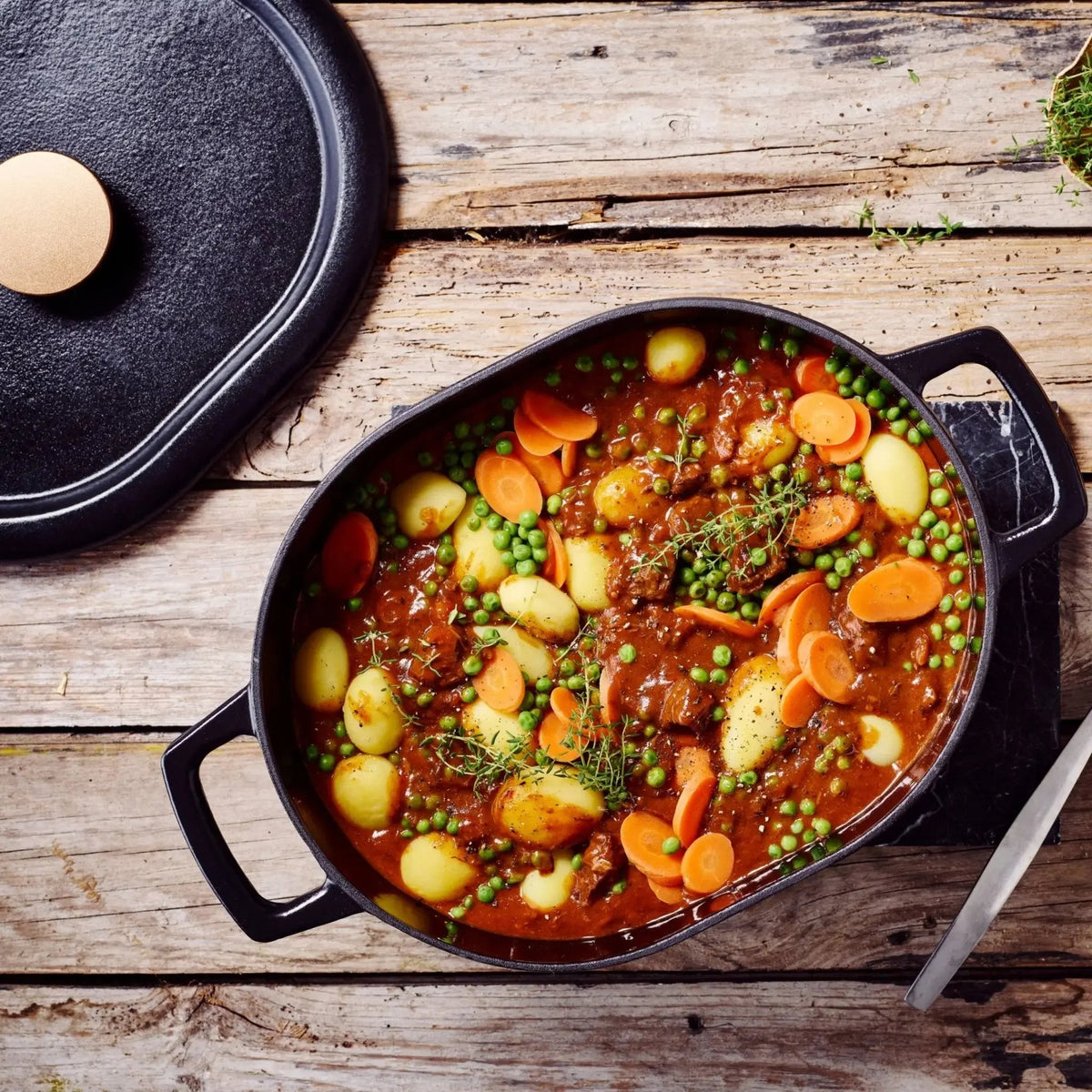
For baked pasta, roasted vegetables, and fruit crumbles, the Enameled Cast Iron Roasting Pan, 12x8 offers the same no-seasoning convenience in an open baking dish. It can go straight to the table on a heat-safe trivet, and its heat retention helps keep dinner warm while everyone finally sits down.

Heat distribution versus heat retention
A pan that stays hot isn't automatically a pan that's equally hot everywhere.
Cast iron's strength is heat retention. Carbon steel's typically thinner construction makes it more responsive. Both can develop hot spots, especially when a large pan sits over a small burner.
To help food cook more evenly, match the burner to the base and let the pan warm gradually. Start low to medium rather than blasting a cold pan on high. Give cast iron time to warm through, and move food around when needed.
An oval Dutch oven or rectangular roaster may extend beyond a round burner. For those pieces, oven cooking surrounds the cookware with heat instead of concentrating it beneath the center.
And leave some breathing room between ingredients. A crowded pan traps steam, which gets in the way of the browned edges you came for.

Choosing cookware without unwanted extras
If you're shopping for cookware free of PFAS, including PTFE and PFOA, look for clear material disclosures and testing that applies to the product you're buying. Good cookware should come with more than a vague “non-toxic” promise.
Bare carbon steel and bare cast iron don't need a fluorinated nonstick coating. Their cooking surface develops through seasoning. Enamel offers another option without relying on a PTFE nonstick layer.
PFAS, PTFE, PFOA, PFOS, and BPA are not intentionally added to any of the cookware Terra Cove Home offers on our site. Our manufacturers and suppliers have independent studies done on the cookware we offer, as additional reassurance of quality and safety.
Can they go from stove to oven?
Often, yes, but the complete piece determines the limit. Handles, lids, knobs, and finishes matter as much as the metal underneath.
Many of Terra Cove Home's products are listed as oven-safe up to 500°F and compatible with gas, electric, ceramic, halogen, and induction cooktops.
That makes it easy to start browning on the stove and finish cooking in the oven. Use dry oven mitts, including after the pan returns to the stovetop. A hot handle doesn't become less hot because you've moved it somewhere familiar.
On glass cooktops, lift cookware rather than sliding it. On induction, warm it gradually instead of starting with boost. And keep all of these metal pieces out of the microwave.
Seasoning and everyday upkeep
Seasoning is oil that has bonded to the cooking surface through heat. It helps protect bare iron and steel from rust and improves food release. It isn't a layer of yesterday's dinner that you're supposed to preserve.
Pre-seasoned cookware has that foundation already. Keep building and maintaining it by cooking with some fat, cleaning properly, drying thoroughly, and wiping on a very thin layer of oil afterward. Too much oil can leave a sticky finish.
You don't need a full oven-seasoning session after every meal. Re-season when the surface needs repair, such as after rust removal or substantial seasoning loss, following the manufacturer's method and temperature limits.
Enameled cast iron skips that routine. Protect its finish with wood or silicone utensils, moderate stovetop heat, and gentle handling. Avoid prolonged empty heating, particularly on high.

Cleaning without making it a whole thing
For bare carbon steel and bare cast iron:
Let the pan cool enough to handle safely, then hand wash. A little mild dish soap is generally fine for sound seasoning; follow the maker's care instructions.
Loosen stuck food with a brush or suitable scraper. Briefly simmering a little water can help with stubborn bits.
Dry immediately and completely. Gentle stovetop heat can remove lingering moisture.
Wipe on a thin film of cooking oil, then wipe away the excess.
Skip the dishwasher and long soaks. Leaving it in the sink “until tomorrow” is how a perfectly good pan ends up with a rust problem.
For enameled cast iron, let it cool, then wash with warm water, mild soap, and a soft sponge. A short soak can loosen stuck food. Avoid steel wool, abrasive cleaners, and sharp scraping. Hand washing is the recommended approach for the two enameled pieces featured here.
Never run cold water into a hot pan. Sudden temperature changes can warp metal or crack enamel.
Storage and a few practical questions
Put cookware away completely dry. Keep bare iron and steel lightly oiled, and use a pan protector or soft cloth between stacked pieces. Protect enamel from knocks, and leave lids slightly ajar if needed so moisture isn't trapped inside.
Will food stick? It can, especially with newer seasoning, too little fat, or poor temperature control. Enamel isn't nonstick either. Preheat appropriately and let food brown before trying to move it.
Can I use metal utensils? You can use them on the hammered carbon steel pan, but avoid aggressively scraping the seasoning. Choose wood or silicone for enamel.
What if the pan rusts or chips? Surface rust on bare iron or steel is often repairable. Chipped enamel on the cooking surface is different: stop using the piece and contact the manufacturer. Seasoning won't repair enamel.
Can I leave leftovers in it? Transfer leftovers to food-storage containers, especially after cooking in bare iron or steel. That frees up your pan and avoids prolonged contact with moisture and acidic food.
Which one belongs in your kitchen?
Choose carbon steel if you want a manageable everyday frying pan for quick meals, browning, and responsive heat control.
Choose bare cast iron if you value sturdy heat retention and don't mind the weight or seasoning routine.
Choose enameled cast iron if you love braises, tomato-based dishes, roasting, and baking, but would happily pass on maintaining seasoning.
For a practical pairing, we'd start with the hammered carbon steel frying pan and add an enameled Dutch oven or roaster based on what you cook most. Weeknight dinner gets its pan. The slow Sunday roast gets its pot.
You don't have to choose sides. Just choose what earns its cupboard space.