

Ceramic nonstick cookware is easy to love. It releases eggs, fish, and pancakes with very little oil, cleans up fast, and feels like a practical step for a healthier, less frustrating kitchen routine.
The tradeoff is simple: ceramic nonstick cookware performs best when you treat it gently. If you use high heat, scrape it with hard tools, or run it through harsh dishwasher cycles every day, the slick surface can fade much sooner than you expected. If you keep the heat lower, choose soft utensils, and wash it by hand, you can stretch its useful life and keep that smooth release working longer.
Why ceramic nonstick cookware loses performance over time
Ceramic nonstick cookware is durable enough for normal home cooking, but it is still a coated surface. That means wear is part of the product’s life cycle. Over time, heat, friction, and aggressive cleaning can make the cooking surface less slippery.
This is one reason many home cooks feel disappointed after a pan starts strong and then seems to “lose its nonstick.” Usually, the problem is not one dramatic mistake. It is a pattern of small habits. A metal spatula here, a hot burner there, a dishwasher run after a sticky dinner, then an abrasive scrub the next morning.
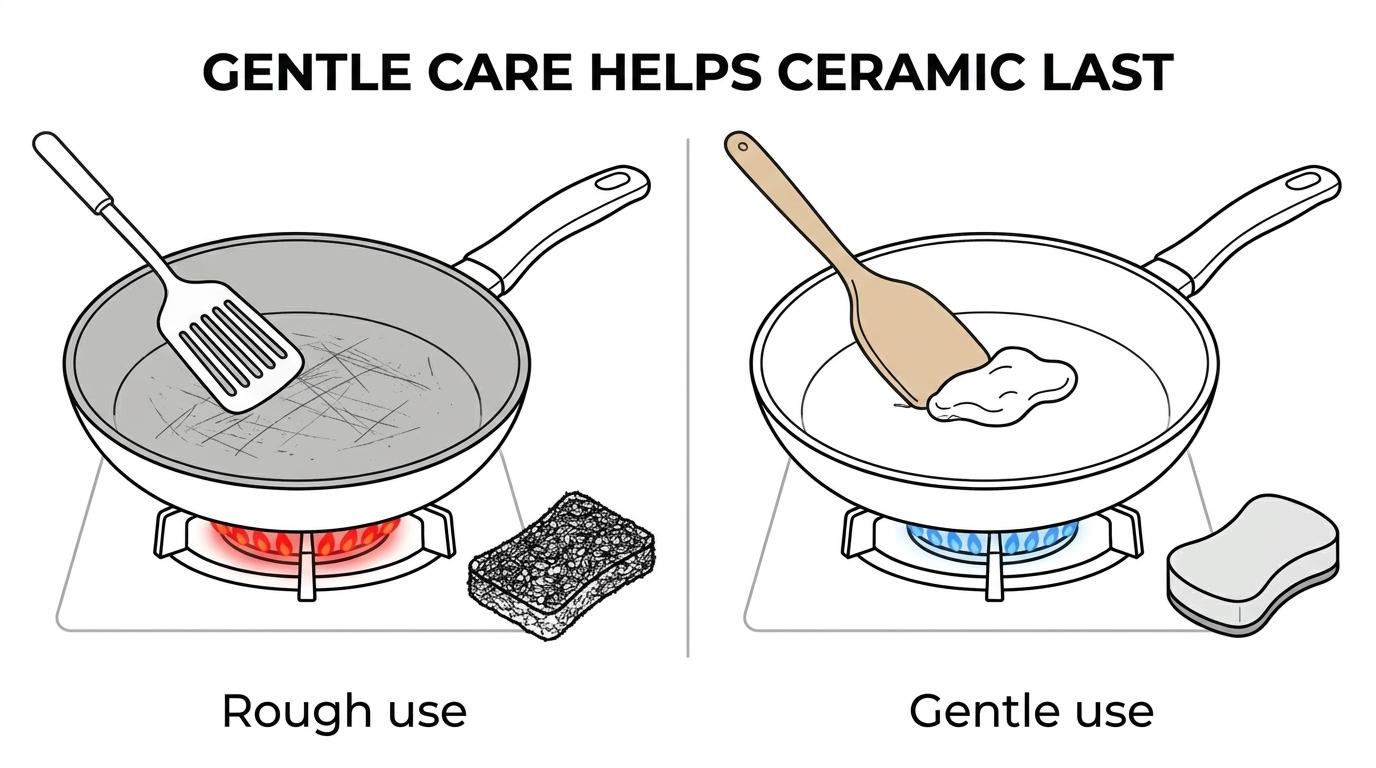
Guidance from the FDA and expert and extension sources points to the same care pattern: avoid sharp tools, rough cleaning pads, and excessive heat. Those habits protect the nonstick finish and help slow down the kind of wear that shows up as sticking, rough spots, or visible scratches.
|
Daily habit |
What can happen to ceramic nonstick cookware |
Better choice |
|---|---|---|
|
High heat cooking |
Faster coating wear and reduced slickness |
Low to moderate heat |
|
Metal utensils |
Surface scratches and shortened coating life |
Wooden or silicone tools |
|
Abrasive pads and cleansers |
Dull, worn, or scratched finish |
Soft sponge with hot soapy water |
|
Frequent dishwasher use |
Harsh detergent exposure |
Gentle hand-washing |
|
Hard stacking with other pans |
Scratches from contact |
Store with a soft barrier |
Best heat settings for ceramic nonstick cookware
If you want ceramic nonstick cookware to last, heat control is the first habit to fix. Low to moderate heat is the sweet spot. That is where ceramic pans tend to perform best, and it is where the coating is less likely to wear down quickly.
Slow heating matters too. Instead of turning the burner to high and walking away, bring the pan up gradually. That gives you better control over cooking and puts less stress on the surface. We advise against blasting nonstick cookware with high heat, especially 500 degrees Fahrenheit or hotter. Staying well below that level is a smart rule for day-to-day use.
This matters for how you choose the pan, not just how you use it. Ceramic nonstick cookware shines with delicate foods and quick meals. It is not the best tool for every job.
After you match the pan to the task, the pan usually rewards you with easier cleanup and more consistent performance.
- Eggs and omelets
- Pancakes and crepes
- Delicate fish
- Quick vegetable sautés
- Reheating leftovers
If you want a hard sear on steak, blackened vegetables, or any high-heat stovetop work, a different pan is the smarter pick. That is where a carbon steel frying pan makes more sense. For oven roasting, braising, or acidic dishes that need longer cook times, enameled cast iron is often the better fit. When each pan handles the task it was built for, your ceramic nonstick cookware does not have to take abuse it was never meant to handle.

Best utensils for ceramic nonstick cookware
Your utensil choice has a direct impact on coating life. Sharp or rough-edged tools can scratch the surface, even when the damage seems minor at first. Those little marks add up.
Wood and silicone are usually your safest options. Smooth-edged nylon can also work, but the key is gentleness, not just material. You want tools that move food without digging into the finish.
If you are updating your kitchen, this is an easy place to start. A set of wooden utensils from Terra Cove Home pairs naturally with ceramic nonstick cookware and helps cut down on the day-to-day friction that shortens pan life.
A good rule is simple:
- Best choices: wooden spoons, wooden turners, silicone spatulas
- Use carefully: nylon tools with smooth, non-sharp edges
- Avoid: metal spatulas, forks, whisks with exposed metal contact points
How to clean ceramic nonstick cookware without damaging the coating
Cleaning habits can either preserve ceramic nonstick cookware or wear it down faster than cooking ever will. Even if a pan is labeled dishwasher-safe, hand-washing is usually the safer choice for the coating. Harsh dishwasher detergents and repeated machine cycles can be rough on nonstick finishes over time.
For daily cleanup, keep it boring. Hot soapy water, a soft sponge, and a light touch are enough for most meals. If food sticks, resist the urge to attack it with a rough scrubber. Let the pan soak first, then wipe it clean once the residue loosens.
Abrasive scouring pads and abrasive cleansers are a bad match for ceramic nonstick cookware. The FDA advises avoiding abrasive cleaning tools on nonstick finishes, and that lines up with what cooks tend to see at home. Once the surface is scratched or dulled, performance often drops fast.
If you want a repeatable routine, use this one:
- Let the pan cool enough to handle safely.
- Wash it by hand with hot soapy water.
- Use a soft sponge or soft dishcloth only.
- Soak stuck-on food instead of scraping or scouring.
You don't need specialty cleaners. You need consistency. Gentle cleaning after each use does more for ceramic nonstick cookware than any “restoration” trick after the coating has already worn down.
How to store ceramic nonstick cookware to prevent scratches
Storage gets ignored, but it matters. A ceramic pan can come out of the sink in great shape and then pick up scratches in the cabinet from being stacked against rough cookware, exposed metal edges, or heavy lids.
If you stack pans, place a soft barrier between them. A simple pan protector, dish towel, or cloth liner can help reduce surface contact. Try not to slide pans across each other when you put them away. Lift, place, and keep the finish protected.
This is also another reason wooden utensils are useful beyond cooking. A kitchen built around softer tools and thoughtful storage usually gets more life out of coated cookware.
Signs your ceramic nonstick cookware is wearing out
Ceramic coatings do not last forever, even with great care. You should expect gradual wear over time, especially if the pan gets frequent use. The goal is not to make it last forever. The goal is to make it last as long as reasonably possible while keeping performance reliable.
Watch for a few common signs that your ceramic nonstick cookware is reaching the end of its best years. Food that used to slide now sticks in patches. The finish looks rough, scratched, or visibly worn. Cleaning becomes harder even though your routine has stayed the same.
That is usually your signal to rethink the role of that pan in your kitchen.
- Sticking gets worse: even with oil and lower heat
- Surface damage appears: scratches, chips, or rough areas
- Cleanup gets harder: residue clings more than it used to
- Cooking results change: delicate foods tear instead of releasing cleanly
When that happens, replacing the pan may be the right call. It can also be a good moment to build a smarter cookware mix instead of relying on one pan for everything.

A better cookware setup beyond ceramic nonstick cookware
If you cook often, the best kitchen setup is rarely all ceramic nonstick cookware. A more practical setup uses ceramic for the foods it handles well, then adds longer-wearing materials for the rest.
That kind of mix helps you protect your coated pans and make better buying decisions. You stop expecting one surface to do every job, and your cookware collection starts working as a system.
A balanced setup can look like this:
- Ceramic nonstick cookware: eggs, fish, pancakes, quick low-heat meals
- Carbon steel frying pan: high-heat searing, browning, crisp edges
- Enameled cast iron cookware: roasting, braising, sauces, oven cooking
- Wooden utensils: daily protection for coated surfaces
This is where Terra Cove Home fits naturally. If you are trying to move away from disposable-feeling cookware and build a healthier kitchen, pairing ceramic nonstick with a carbon steel pan, an enameled cast iron piece, and quality wooden utensils gives you more flexibility and better long-term value.
Ceramic nonstick cookware can absolutely earn its place in your kitchen. You just get the best results when you treat it as a specialty tool instead of an all-purpose workhorse. Keep the heat moderate, use soft utensils, wash gently by hand, and let tougher cookware handle the high-heat jobs. That one shift can help your favorite pan stay useful much longer.